2 MW Agri-Photovoltaic Plants
Solar generation and agriculture sharing the same land.
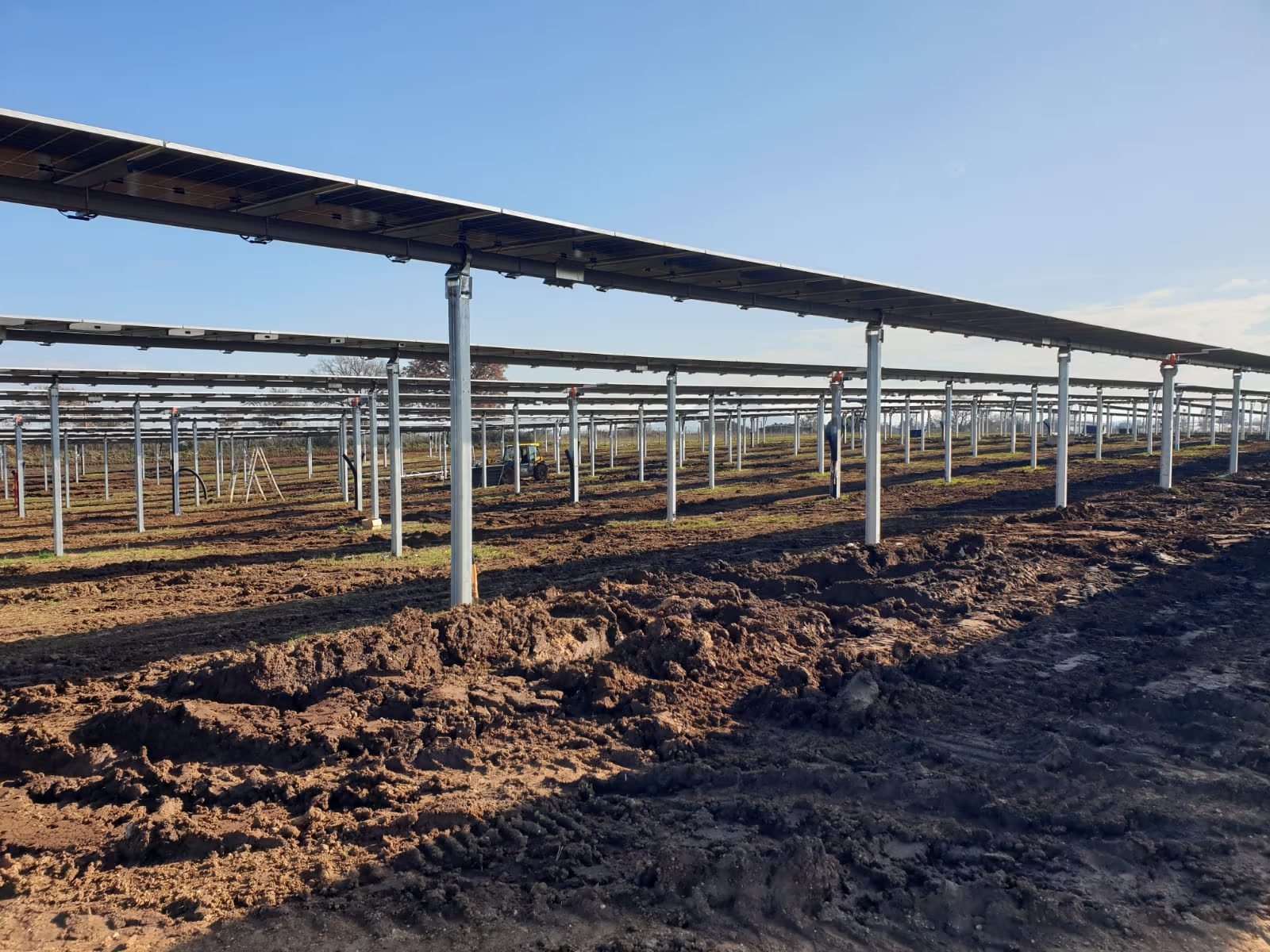
- Timeline
- Jan 2024 — Dec 2026
- Status
- Complete
- Domain
- Energy
- Power output
- 2 MW
- Role
- Procurement, PM
- Site
- Italy
The Build
As with many things, when I started to work on this project I was completely unaware of the scope, the success and the challenges I would face. I had always been fascinated with solar energy and renewables in general, due to their ability to produce power without needing to burn something. It seemed odd that the human race, after almost 50,000 years of development, still gets its main source of energy from fire, like our ancestors did to cook meat.
Either way, how did this project start?
- interest in energy
- basic physics knowledge
- sourcing experience from China
- exposure to solar energy's profit-generating potential through a home roof installation
After some back-of-the-envelope calculations I saw that one could theoretically have an ROI of 200%. This ignored pretty much every cost apart from the cost of the panels, but it was enough to get me excited about the project and to dig deep. After more research I found an opportunity in Italy, where the state offered a guaranteed energy price to sell energy and a 40% subsidy on the cost of developing agri-photovoltaic projects.
This seemed like the perfect opportunity to jump in. The hardest part was convincing the people whose capital would be on the line that the opportunity was real. Once they were in, the project started. Initially my whole focus was on finding suitable terrains, so I researched permitting laws, geographical restrictions, and so on, which helped me to narrow down the pieces of land I found. In the end I found three suitable ones for 1 MW projects. Two out of the three were used to build 1 MW power plants.
After this process was done I started researching every part needed to build a power plant, and comparing prices and delivery times across all of them between sourcing them locally and buying them from China. This also pushed me to know more about international logistics, trade terms, customs, and the rest.
In the end I sourced:
- 3,600 bifacial solar panels: $176k, against $300k+ in Italy (similar lead time, three months for both)
- 8 custom weather stations: $11k, against ~$100k in Italy (30 days lead time in Italy, three months from China, and I had to develop some custom software for them)
- 2 MW of agri-photovoltaic structure: $200k, against roughly $450k
- CCTV system: $14k, against $28k
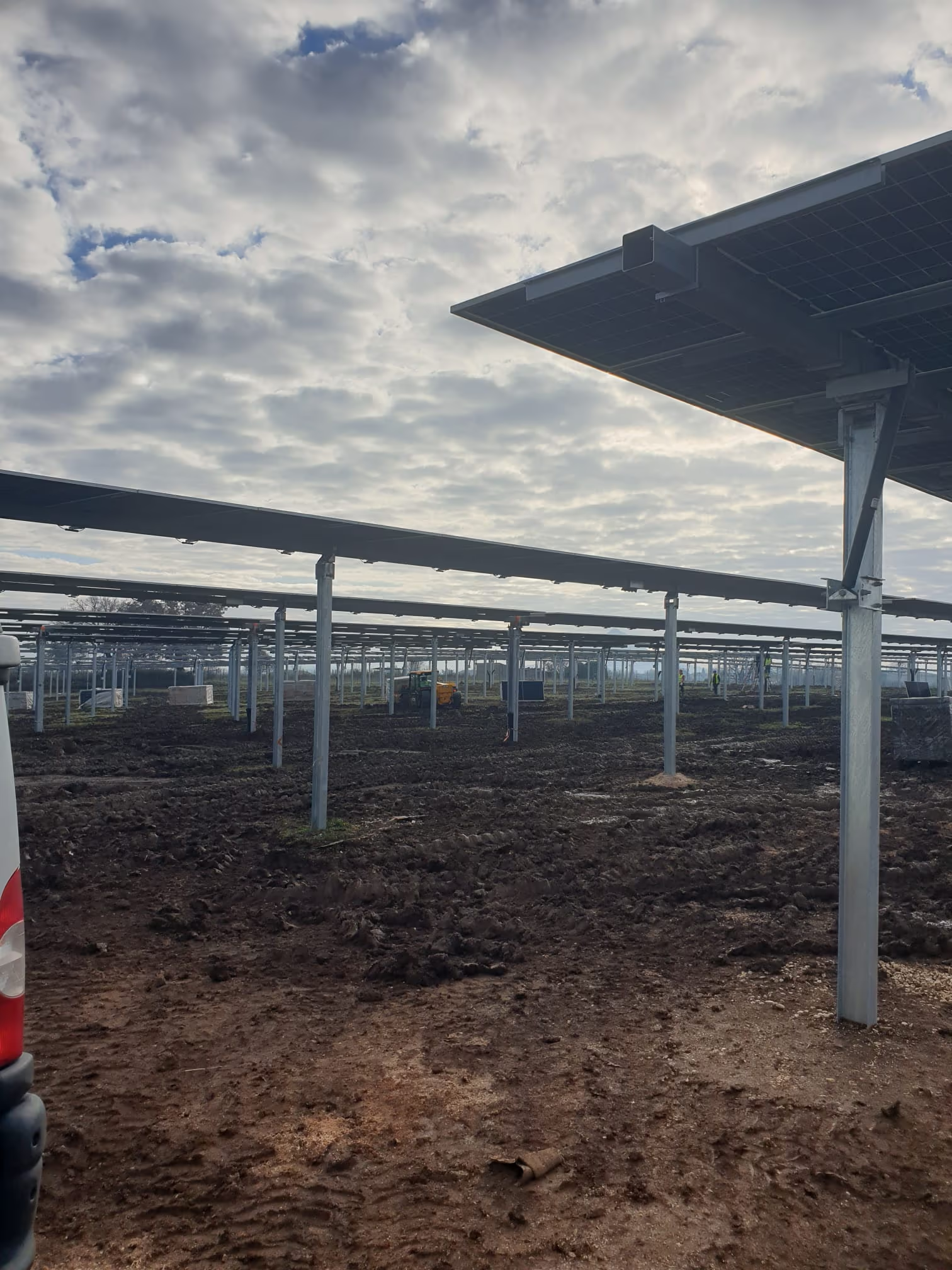
Gallery
What worked
- Taking the risk of sourcing directly from Chinese factories paid off on both price and quality, almost 40% cost savings against buying the same equipment in Italy.
- Found three suitable sites through my own permitting and geographic research; two of them were built out as 1 MW plants.
- A genuinely good investment opportunity: a guaranteed price to sell the energy plus a 40% subsidy on development cost.
- It led to another business: the custom weather stations became Clurasense.
Mistakes Made
In every project I made mistakes. For each one I wrote: what went wrong, why it arose, and what it taught me.
Underestimated the problem of getting the neighbours to agree to the grid connection
- Why it arose
- The connection route crosses land that is not yours, and I treated that as something to settle later, by which point the other side knows how badly you need it.
- What I learned
- Get a signed preliminary agreement far in advance, before it becomes the critical path.
Underestimated the impact of the slopes on the field
- Why it arose
- I relied on a surveyor instead of measuring the terrain myself, so the real gradients only showed up once posts were going into the ground.
- What I learned
- Get a millimetre-accurate topographic map of the field yourself, with a LiDAR drone. Stake it out in house rather than trusting a surveyor, and run a string between two pillars to check heights before driving a single post.
Underestimated what it takes to unload the material
- Why it arose
- Containers were shipped before anyone had decided where and how they would be emptied.
- What I learned
- Unloading heavy goods from a container without a crane is close to impossible: you need either side-loading trailers or a crane, both difficult and expensive. Ideally use a warehouse at ground level and your own forklift, and decide this before the goods ship.
Underestimated shipping times and demurrage at the port
- Why it arose
- Nobody was ready to collect the containers the day they landed.
- What I learned
- Every day a container stays in port costs you money. Make sure that as soon as they arrive they are collected and unloaded where they are needed.
Got the order of works and of purchase orders wrong
- Why it arose
- I ordered things in the sequence I happened to think of them, not in the sequence their lead times demanded.
- What I learned
- The transformer cabin determines every other timeline, so order it and have it ready as early as possible, and pour its concrete slab immediately, since it takes two weeks to dry. Order the PV cables and the thicker connection cables from China at the same time.
Bought the whole CCTV chain from a single supplier
- Why it arose
- Site security was treated as one line item at the end instead of a system with its own requirements.
- What I learned
- Have China ship pre-wired cabinets (batteries, cameras, and a solar street light) together with the structure, and mount them on a concrete block. Watch the channel count on the video recorder: two channels for every thermal camera. Don't rely on one manufacturer for everything: order cameras, power supplies, switches and fibre separately, using pre-terminated armoured fibre. Prefer solar-powered cameras where possible, with wireless radio bridges back to the cabin.
Left the fencing and the site boundaries until late
- Why it arose
- The fence looked like the last step of the build rather than the first line of protection for everything already delivered.
- What I learned
- Order the fencing from China, ideally with the robot to install it, or just order the material there and have a local contractor put it up. Check the boundaries carefully, and get surveillance in place before the works start, not after.
Underestimated the landscape and regulatory procedures
- Why it arose
- I planned the plant as an engineering problem and treated the paperwork as a formality that would sort itself out.
- What I learned
- Budget real time for it: Opengenio for the seismic analysis, SINPOL/SIP for the preliminary notice of works, updated every time a new firm enters the site or you get fined, then DILA/PAS, landscape constraints, and tree-felling permits. Ask every contractor for its INAIL and INPS details the moment you award the contract.
Didn't check the CE certificates of the critical systems early enough
- Why it arose
- Certificates were something to collect at the end, after price and quantity had been agreed.
- What I learned
- We got lucky: everything we installed did turn out to have its certificate in order. That was luck, not process. For every critical system installed, the CE certificate is the first question to ask after quantity and specs, not the last.
Started the works in winter
- Why it arose
- The schedule was built around order lead times and never around the weather.
- What I learned
- Rain stops a construction site. Don't begin the works in winter.