Clura Enclosure
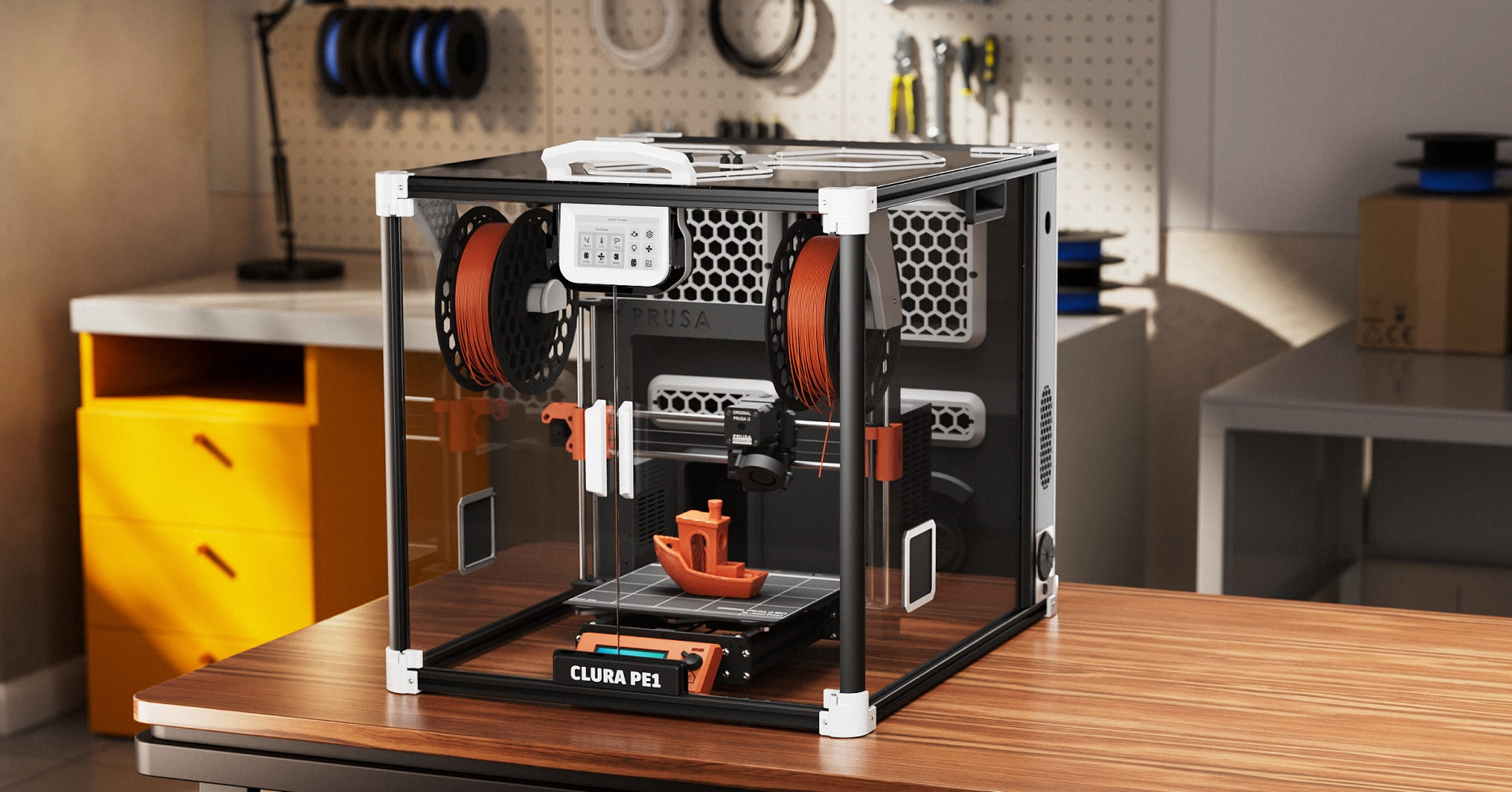
The ultimate 3D printer enclosure.
- Timeline
- Jul 2024 — Sep 2026
- Status
- Complete
- Domain
- Hardware / Product Design
- Role
- CEO, lead engineer, production
- Stack
- Fusion 360 & Solidworks, Figma, DaVinci Resolve, STM32 IDE
- Links
- Site · Kickstarter · GitHub · Instagram
The Build
Well, let's start with some backstory. I started this project right after Andromeda. I was tired, and felt a bit defeated. I had just pivoted for the first time and it felt more like a loss than a win. Sure, I had freed up my time, but at the same time I had hoped that the previous project would have led somewhere different.
At the start I did not really know the extent to which this project would grow. I guess it's a recurring theme in everything I do, which to be honest might be why I start things and throw myself out there.
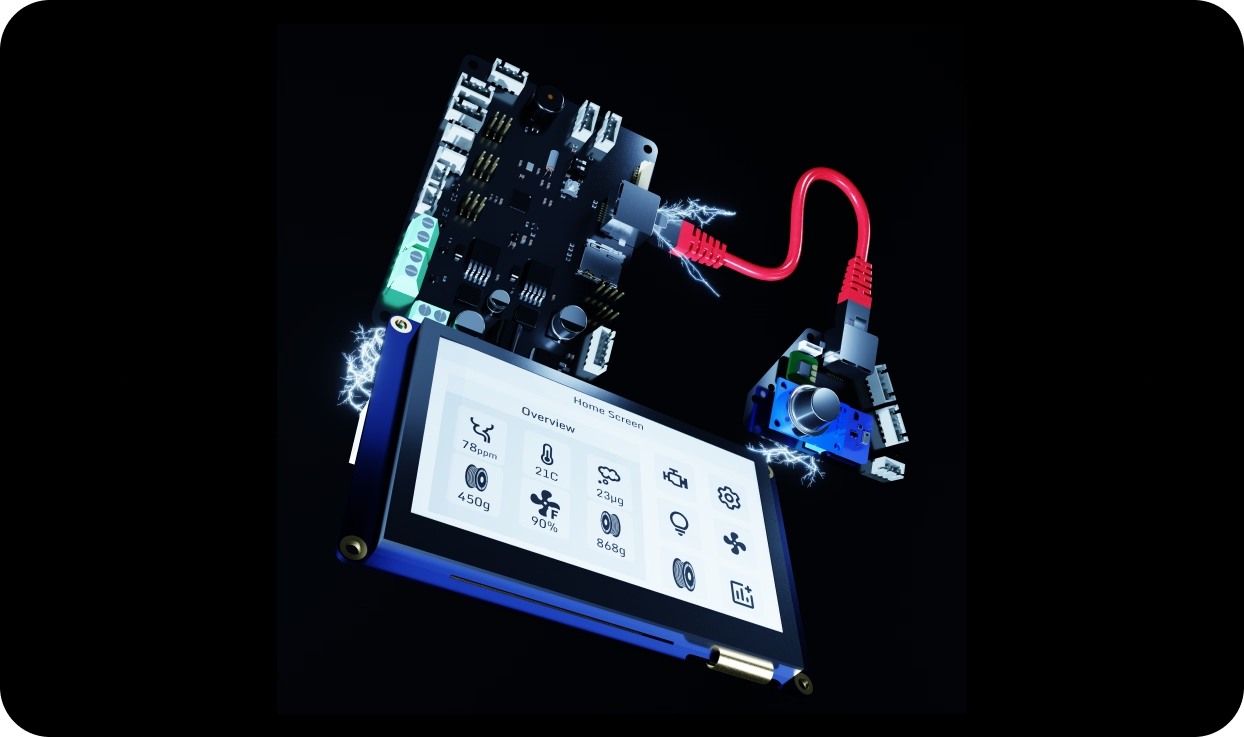
Initially it was supposed to be just a box with a simple fan to filter the air. No complex sensors, no electronics. I quickly got passionate with the idea and moved fast toward adding more features and making it the best it could be. I spent some time thinking about the best placement for the electronics: whether to do a full back panel, a side panel, or just an electronics box. Then I had to decide how to mount the panels, and which panels to make moveable. Then came the screen: where to place it, what it should control, how it should be powered. STM32 or ATmega? The choice was not that easy: one was cheaper and more enterprise, but really lacking in libraries for everything we wanted to add, while the other one powers the Arduino, so everything would have worked straight out of the box. We chose cost over speed, which looking back might be one of the mistakes you'll see in the next section.
After that choice we had a lot of testing, revisions and prototypes, and each one brought with it waiting for parts to arrive, waiting to test, finding problems and starting all over again.
In the end, when we felt comfortable that we had something ready, we prepared for a Kickstarter campaign to raise the funding to actually produce it, as most things had MOQs when ordering them. We tried to really focus on organic marketing (reaching over 500k views on our account) while also trying paid ads. This helped us sell over 150 units and raise more than $40k.
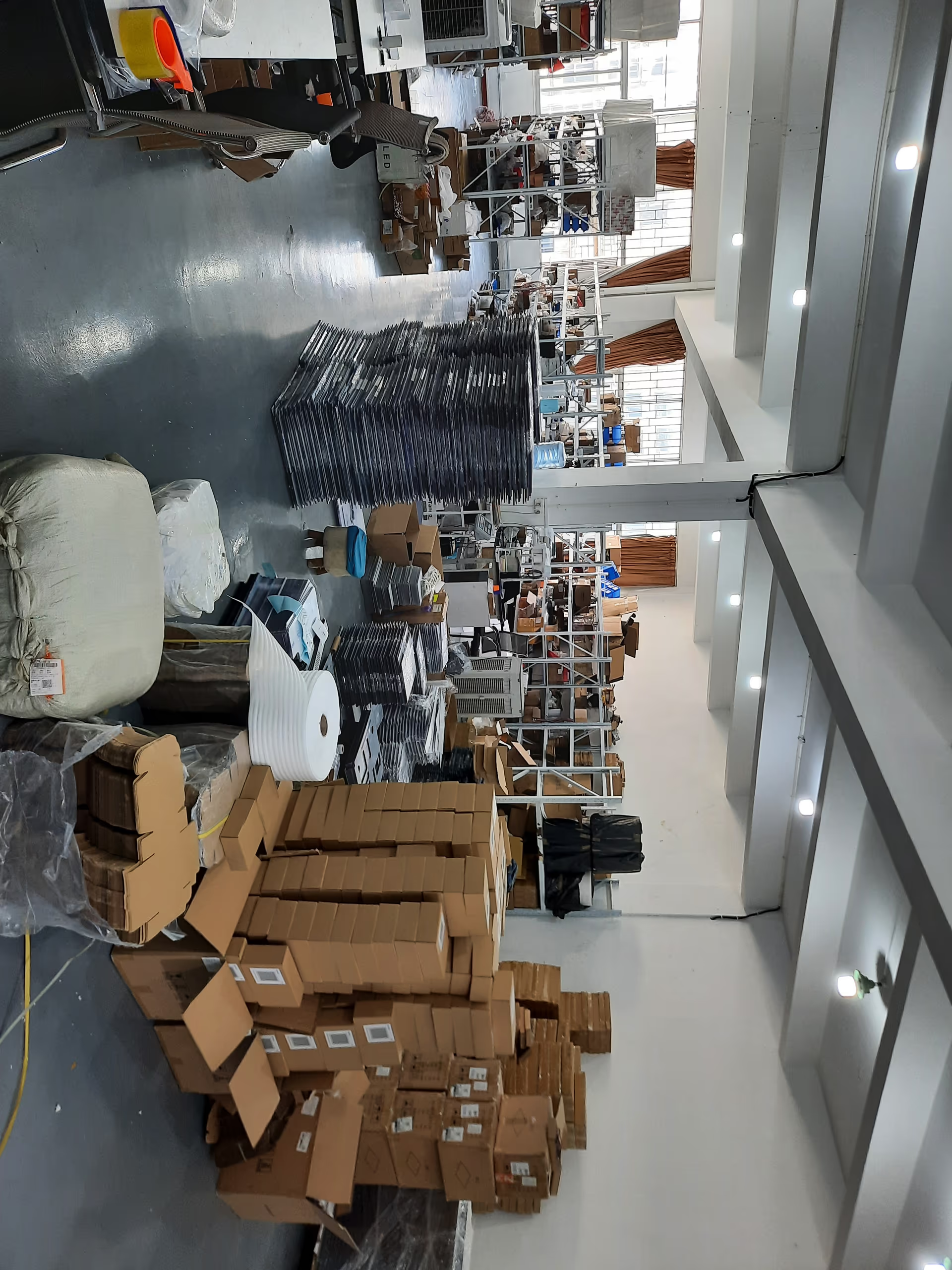
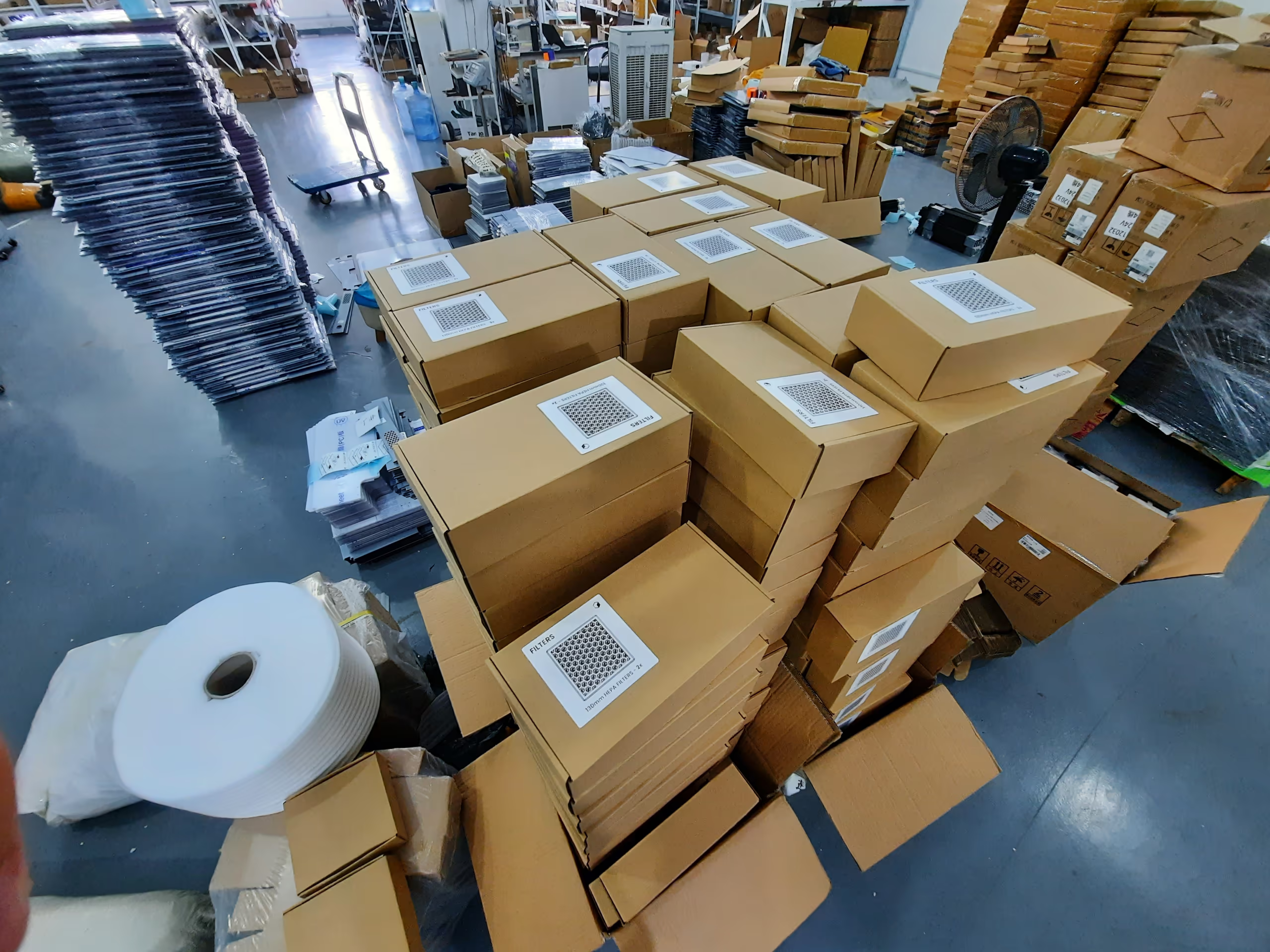
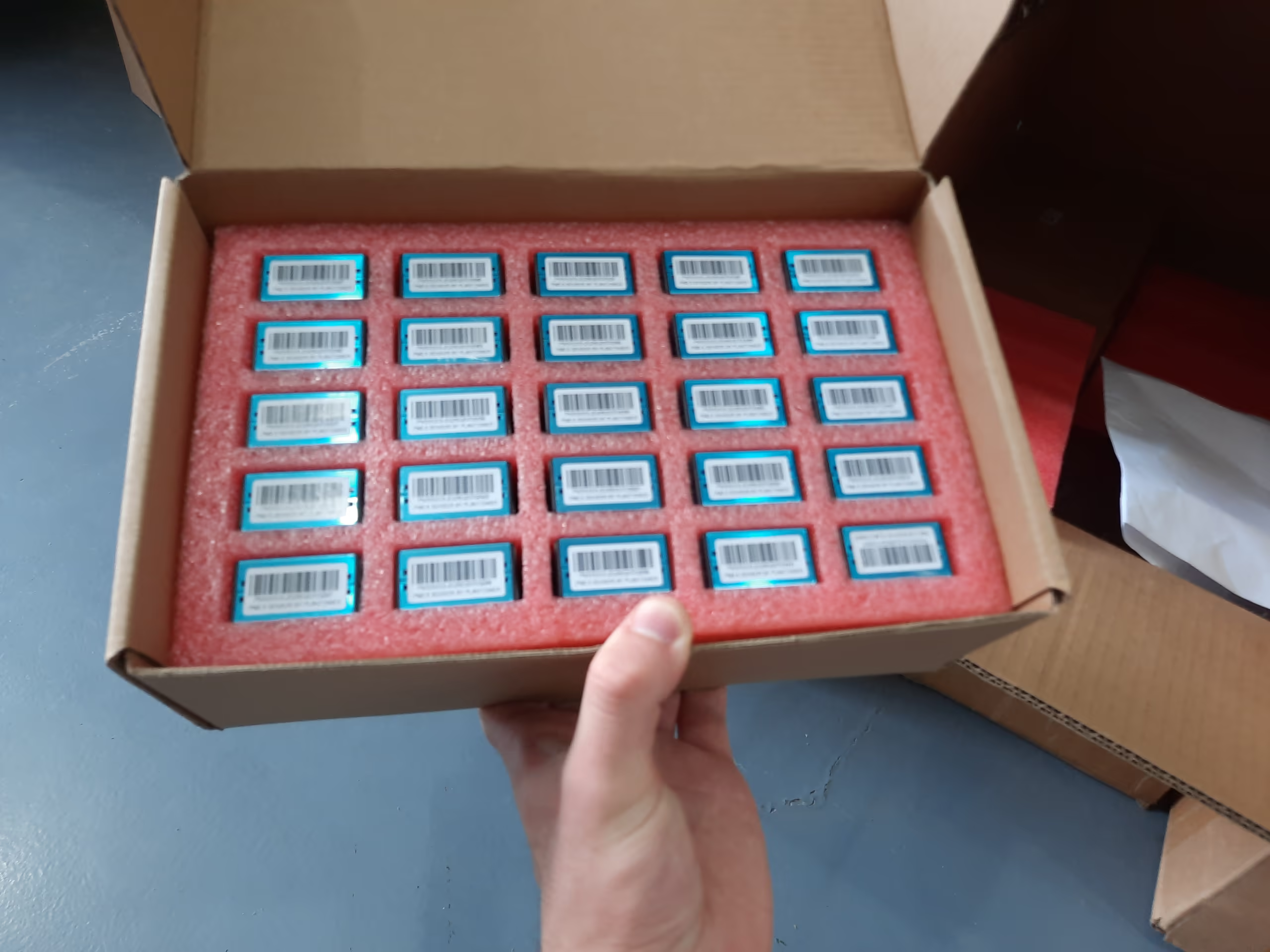
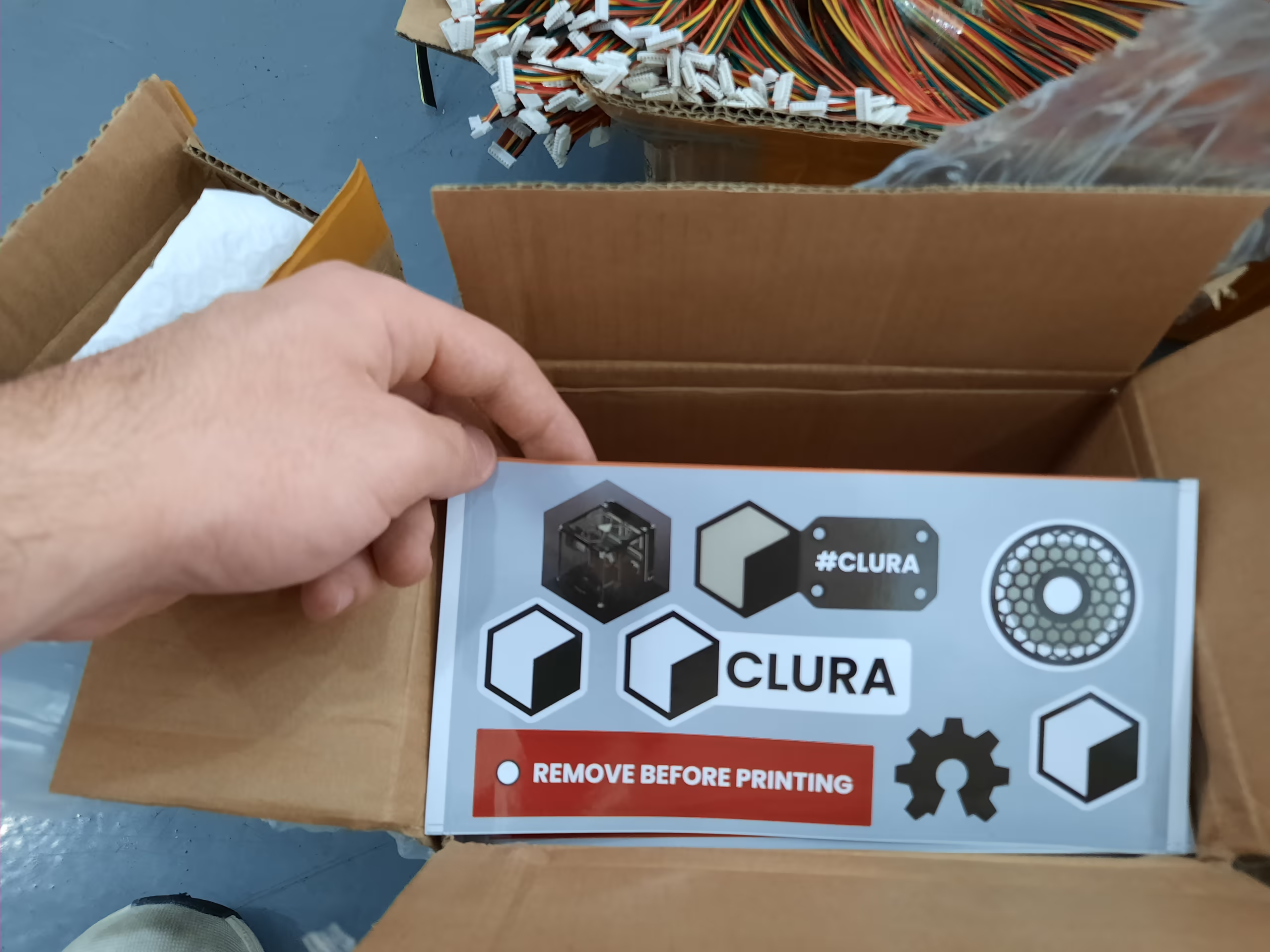
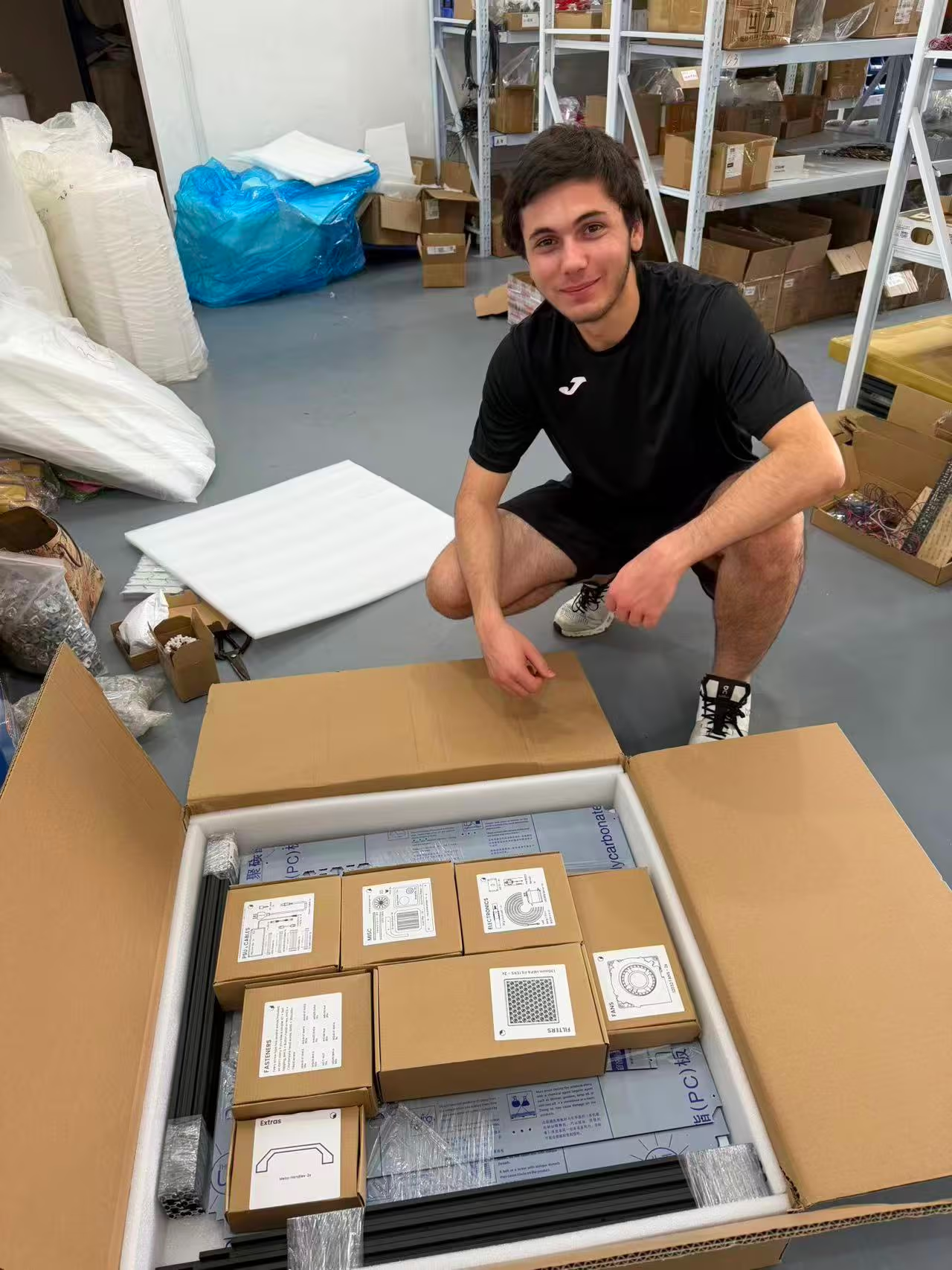
What was next? Well, flying to China for production and staying two weeks on the factory floor, every day from 8 to 8 in the sweltering heat of summer. Fixing issues with wrong parts, making processes for production and quality control, a lot of tea and coffee, and hope that everything would turn out alright.
Gallery
What worked
- Bringing a hardware product from idea to design to marketing to production to shipping, seeing the whole lifecycle from end to end.
- Not giving up when things were slow, painful, sad, lonely. Being able to stay up all night just trying to fix the last problem, which, spoiler, was never truly the last.
- Learning how sourcing works in China for products.
- Reaching over 500k views organically, which turned into over 150 units sold and more than $40k raised on Kickstarter.
Mistakes Made
In every project I made mistakes. For each one I wrote: what went wrong, why it arose, and what it taught me.
Ran too many projects simultaneously, which slowed all of them down
- Why it arose
- Everything looked worth doing at once, so nothing got a clean run at being finished.
- What I learned
- Focus on one thing at a time, keep track, and finish it quickly. Speed is everything and should be prioritized over cost. We picked the STM32 over the ATMega because it was cheaper, which led to far more development work writing libraries for every single component we wanted to install.
Never checked whether there was product-market fit
- Why it arose
- It started as a passion project, so the question of who needed it and why never got asked properly.
- What I learned
- If I ever aspire to sell a product, even one that starts as a passion project, I should really consider whether there is product-market fit.
Kept adding features while developing the product
- Why it arose
- Every improvement seemed obviously worth the small delay it cost.
- What I learned
- This leads to a never-ending cycle of improvement and development which delays launch.
Shared what we were doing far too late
- Why it arose
- We did organic marketing and tried to share what we were building, but only started right before launch.
- What I learned
- Sharing along the way is a method to keep yourself accountable, and to see whether people are even interested.
Lost track of time, tasks and overlapping deadlines
- Why it arose
- There was never a moment where the whole project was laid out end to end, so dependencies only appeared once they were blocking.
- What I learned
- Before any next project, take at least a day to understand everything it could entail: what is needed at each step, what has to happen in series and what can happen in parallel. Then move forward hitting small milestones.
Built a hardware product from outside China
- Why it arose
- University keeps me in Europe, and I assumed remote iteration would be good enough.
- What I learned
- For hardware products you should not stay outside of China. Everything there is fast, efficient and cheap, optimized for prototyping at speeds that are just impossible in the West. Being there could easily have shaved half the time off this project, if not more.
Delegated things I should have done myself
- Why it arose
- Delegation is a lever that lets you do more, so I reached for it even where the work was on the critical path.
- What I learned
- Sometimes, if you want things done on time and done well, you should just do them yourself, even if you don't know how yet. Learn, fail, and improve until you can.
Let my emotions get intertwined with the project
- Why it arose
- When the business is your life, every delay reads as a personal failure.
- What I learned
- It is normal to get emotional when things go badly, but it leads to poor decisions and an aversion to working on the project, because we usually don't like to experience pain. Detach yourself, or at least keep some section of your life separate from what you're doing. That stability is what lets you partition problems and think clearly.Read more about this in this blog post.